Food
In short
Moroccan cuisine centres on slow-cooked tagines (lamb, chicken, or vegetable, simmered with preserved lemon and olives), couscous on Fridays, pastilla (a sweet-savoury pigeon or chicken pie), and mint tea poured from height as a mark of hospitality. Regional specialities vary — Fes is known for pastilla, Essaouira for grilled sardines, Marrakech for tanjia.
Ask any Moroccan about food and the conversation will run long — cuisine here is regional, seasonal, and deeply tied to hospitality. A few dishes show up everywhere, but the best versions of each tend to belong to a specific city or even a specific grandmother.
The tagine, done right
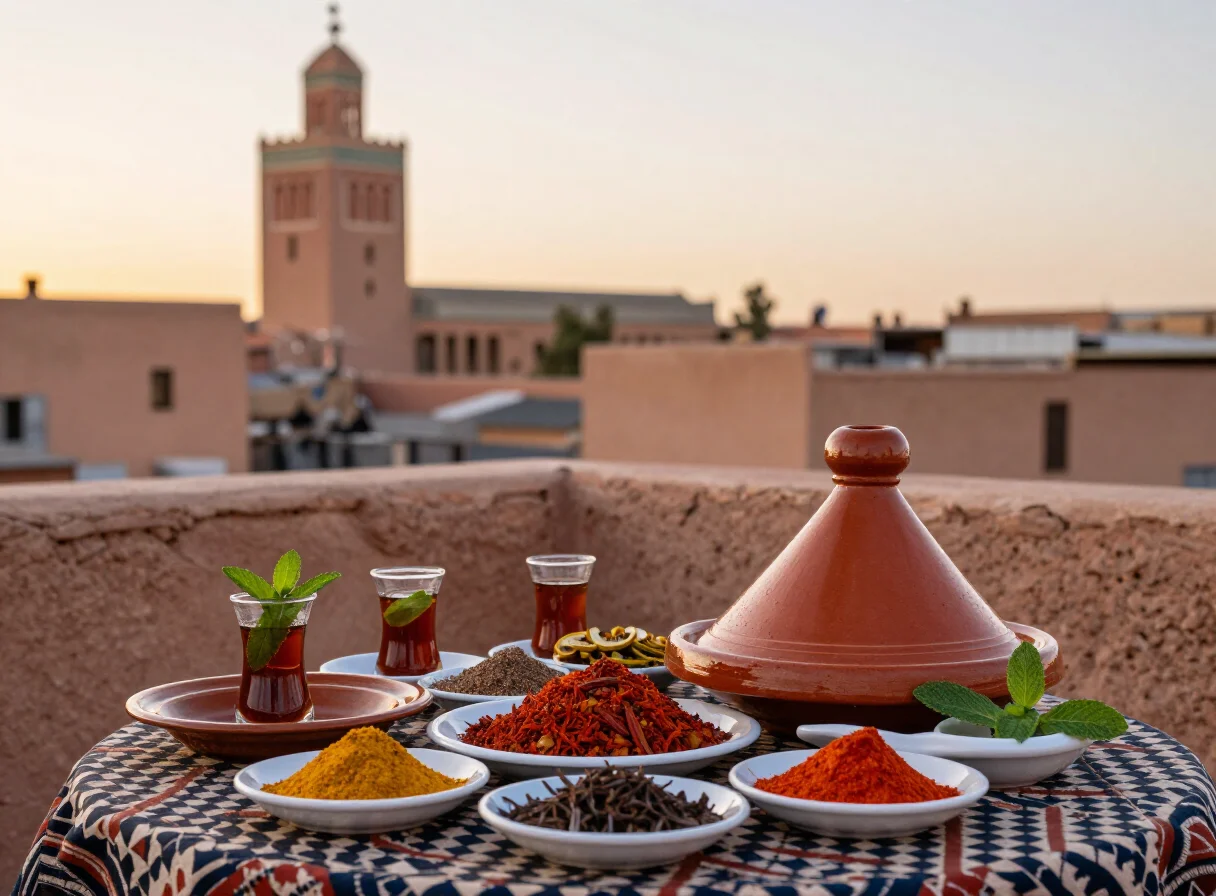
A tagine is both the clay cooking vessel and the dish itself — meat or vegetables slow-cooked with a specific balance of spices, usually preserved lemon, olives, or dried fruit depending on the region. The conical lid traps steam and returns it to the pot, which is why a good tagine needs almost no added liquid. Chicken with preserved lemon and olives is the classic; lamb with prunes and almonds is the celebratory version served at weddings.
Beyond the tagine: what to look for by city
Fes is the place for pastilla — a delicate pastry pie traditionally filled with pigeon, now more often chicken, layered with almonds, cinnamon, and sugar in a sweet-savoury combination that surprises most first-time visitors. In Marrakech, look for tanjia: beef or lamb slow-cooked for hours in a sealed urn, traditionally in the embers of a hammam furnace. Along the coast in Essaouira, it is all about the grill — sardines and the day's catch, simply prepared with charmoula.
Couscous is traditionally a Friday dish, served with seven vegetables and a rich broth. If you're travelling with a private guide, ask where locals actually eat — the best couscous is rarely at the restaurant with the nicest terrace.
Mint tea is not an afterthought
Called "Moroccan whisky" half-jokingly, mint tea is poured from a height to aerate it and create a light foam on top — a small piece of showmanship that also signals hospitality. Refusing a glass when offered is considered impolite; expect at least three rounds if you are a guest in someone's home, following the local saying about the three glasses each tasting different.
Plan your own trip